Window tint can change how a car looks and how it feels to sit in. If you have started shopping for tint, you have probably seen two terms come up again and again: dyed film and ceramic film. Here is what they mean.
What Window Tint Is
Automotive window tint is a thin film applied to the inside of the glass. Depending on the film and the shade, it can reduce glare, add privacy and change the look of the car.
Dyed Film
Dyed films get their color from dye built into the film. They are a common, entry-level choice and are mainly chosen for looks and privacy. Over time, some dyed films can fade or change color, so it is worth asking how a particular film is expected to age.
Ceramic Film
Ceramic films use ceramic particles rather than relying only on dye. They are generally designed with heat and glare in mind, not just appearance, and they are non-metallic, so they are not designed to interfere with phone or GPS signals the way some metal-based films can. Ceramic films are usually the more premium option.
At Rivali we install KOVA Ceramic Tint. You can read more about it on our window tint page.
Choosing A Shade
Shade is about more than looks. A few things to think about:
- Visibility at night. Darker shades look great but can make it harder to see in low light.
- Local rules. Window tint laws vary by state and by window. California and Arizona each have their own rules, and they can change, so check what applies to your car before you choose.
- Consistency. Many owners like the side and rear windows to look uniform.
Our team can talk you through the options for your car and where you drive.
Install and Aftercare
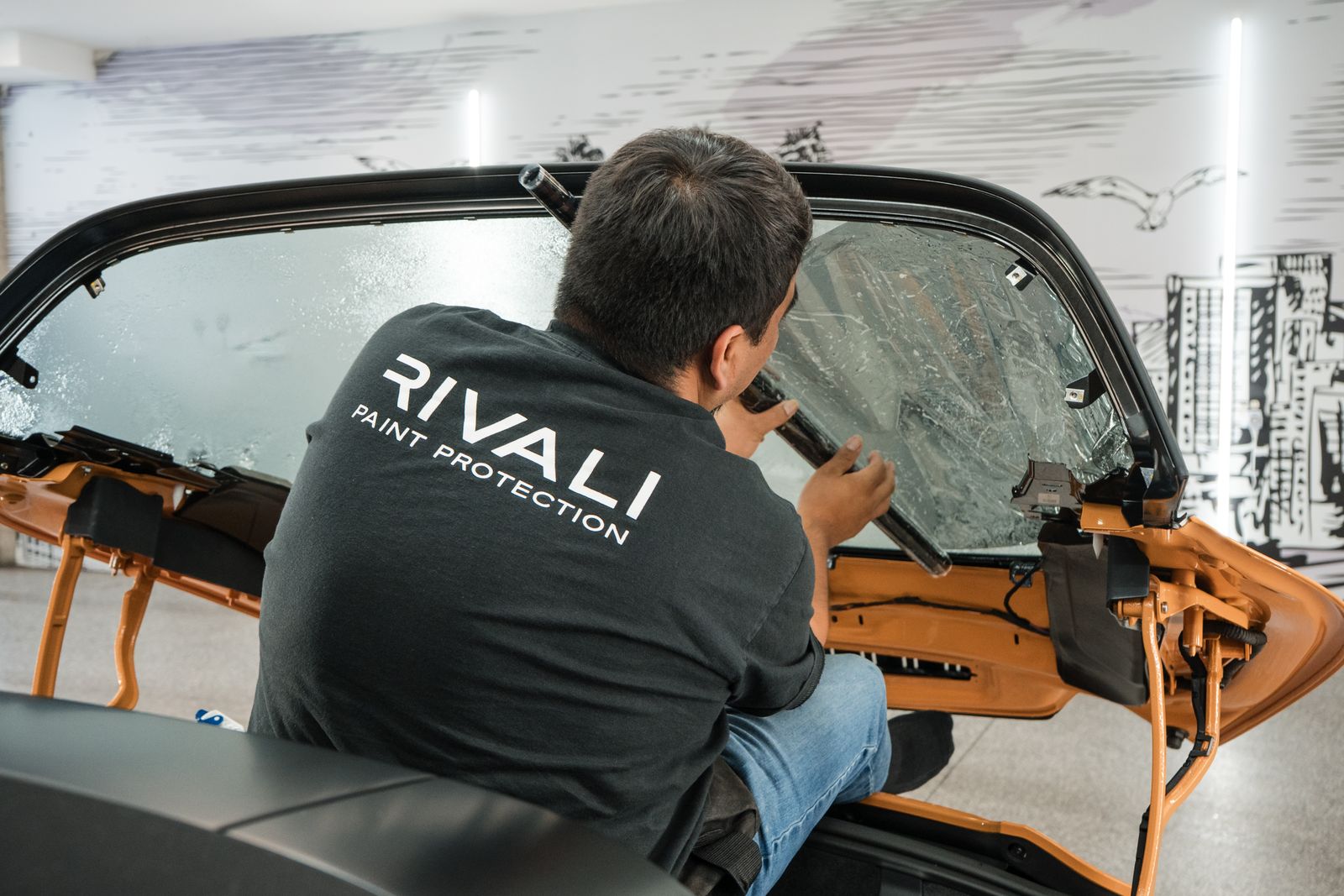
Tint is applied to clean glass and needs time to cure. Your installer will tell you how long to keep the windows up and when you can clean the glass. Some haze or small water spots can be normal during curing. When you clean tinted windows, use a soft cloth and a tint-safe cleaner, and avoid sharp tools near the film.
Tint Alongside Other Protection
Tint is often booked alongside Paint Protection Film or a ceramic coating. If you are planning more than one service, mention it when you request a quote and we can plan the visit around it.
Key Takeaways
- Dyed films are mainly chosen for looks and privacy.
- Ceramic films are generally designed with heat and glare in mind and are non-metallic.
- Tint rules vary by state and window, so check what applies to your car.
About Rivali
Rivali installs Paint Protection Film, ceramic coating and window tint at our studios in Torrance and Marina del Rey. Our Scottsdale location is coming late 2026. Every car is different, so the best next step is a conversation: tell us about your car, how you drive it and what you want to protect, and our team will help you choose. You can also browse our blog for more guides.